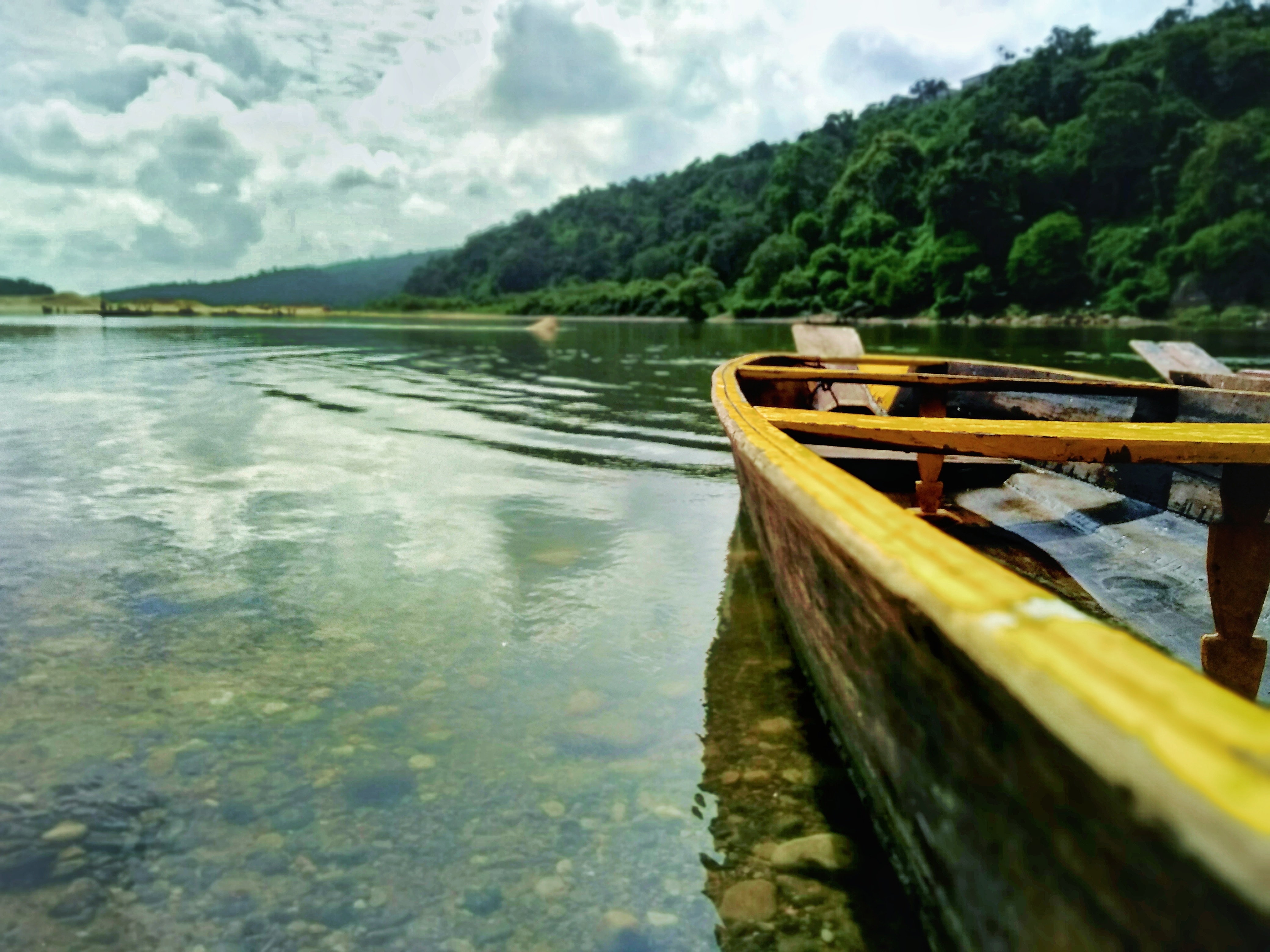
The Glass of Meghalaya
If you travel to the southern edge of the Jaintia Hills, you encounter a phenomenon that feels like a glitch in reality. The Umngot River in Dawki is famous across the world for one reason: its absolute, uncompromising transparency.
When the sun hit the water, the pebbles at the bottom - meters deep - were as distinct as if they were in the palm of my hand. Watching the local boats glide across the surface, you lose the sense of where the water ends and the air begins. It doesn’t feel like sailing; it feels like hovering.
The Horizon of Two Nations
What makes Dawki truly unique in the Arthagaman journey is its position as a threshold. As you drift along the river, you are mere meters away from the international border.
Standing there, you can look out toward the horizon and see the vast plains of Bangladesh. There is a profound silence in realizing that nature doesn’t recognize the lines we draw on maps. The river flows, the hills roll, and the soul of the land remains undivided by the borders we’ve created.
Why the Water Stays Pure
The legendary clarity of the Umngot isn’t just a lucky coincidence. It is the result of a deep-rooted cultural commitment by the local Khasi and Jaintia communities.
- Upstream Discipline: The villages upstream have strict traditional laws against polluting the water.
- Seasonal Magic: While it remains beautiful year-round, the water reaches this “glass-like” state primarily during the winter and early spring months when the mountain runoff is minimal.
- A Living Heritage: For the people of Dawki, the river isn’t just a tourist spot; it’s a lifeline that they guard with a sense of sacred duty.
Finding Meaning in Transparency
In our lives, we are often surrounded by “murky water”—the noise of the city, the clutter of our thoughts. Dawki offers a rare moment of total clarity.
It reminds us that when we protect our environment and simplify our path, the “bottom” becomes visible. We can see exactly where we are standing.
Pro-Tip for Travellers
If you want to see the “Floating Boats” of Dawki, plan your journey between November and February. Avoid the monsoons if clarity is your goal!
Arthagaman - Discovering the Soul of India.